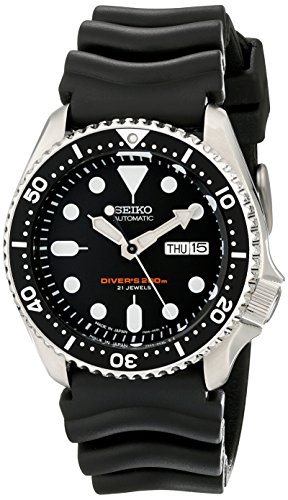
The legacy archive treated every diving watch the same way: a list of spec bullets pulled from the product page — case size, movement, water resistance — and nothing about what those numbers mean. That is not a buying guide, it is a spec sheet with an affiliate link.
This guide is the opposite. Before you buy, you want to understand the three specs that actually decide whether a watch belongs on your wrist: what water resistance claims mean, why the bezel is the defining feature of the category, and how legibility holds up in the dark.
What “water resistant to 200 meters” actually means
Water resistance ratings are tested under static pressure in a lab, not by swimming with the watch. The number is a floor, and different activities put very different stresses on a case:
- 30m–50m (3–5 ATM): rain and hand-washing only. Not a swimming watch.
- 100m (10 ATM): swimming and snorkeling in calm water.
- 200m (20 ATM) and up: the ISO 6425 dive-watch standard begins here — the rating most serious dive watches quote. Fine for recreational diving.
- 300m+: saturation-diving territory; overkill for almost everyone, but a strong sign of a heavily built case.
A 200m-rated watch from Seiko, Orient, or Citizen will handle everything you can realistically do. Paying for 1000m because it sounds impressive is buying marketing, not capability.
The unidirectional bezel: the one feature you shouldn’t skip
The rotating bezel is a dive timer: align the pip with the minute hand, then read elapsed time off the bezel as the hand moves. What makes it a safety feature is that it only turns one way — counterclockwise. If the bezel gets knocked, it can only show less elapsed time than reality, never more. That bias is deliberate: an error that shortens a dive is survivable; one that lengthens it is not.
For everyday wear the bezel is still the most useful complication a watch can have — parking meters, oven timers, brewing coffee. A crisp, grippy bezel with a solid 120-click detent is also simply satisfying to operate.
Legibility: the dial that tells time at a glance
Dive dials are designed to be read in low light and through water. Look for:
- High-contrast markers — a black dial with white or luminous hour markers reads faster than a busy, multi-color dial.
- Lume quality — applied (painted) indices over printed ones, and enough of it. On a 200m watch, luminous hands and markers are the norm; some budget “divers” cheap out here.
- Sapphire crystal if your budget allows — far more scratch-resistant than the Hardlex/mineral on entry models, and worth it for a daily wearer.
The honest sweet spot
You do not need a helium-escape valve or a ceramic bezel to own a great dive watch. The sweet spot for most buyers is a 200m automatic or solar quartz from Seiko (the Prospex/SKX lineage), Orient (Mako/Kamasu), or Citizen (Promaster): real dive credentials, respected movements, and prices that do not require a second mortgage.
The watch in the aperture above — a Seiko automatic diver — is exactly that kind of watch. If you know you want the look and the engineering without the fashion markup, that is where to start. And when you are ready to compare current models and verified prices, the store page is the place to do it — with offers checked before anything is published, per this site’s policy.